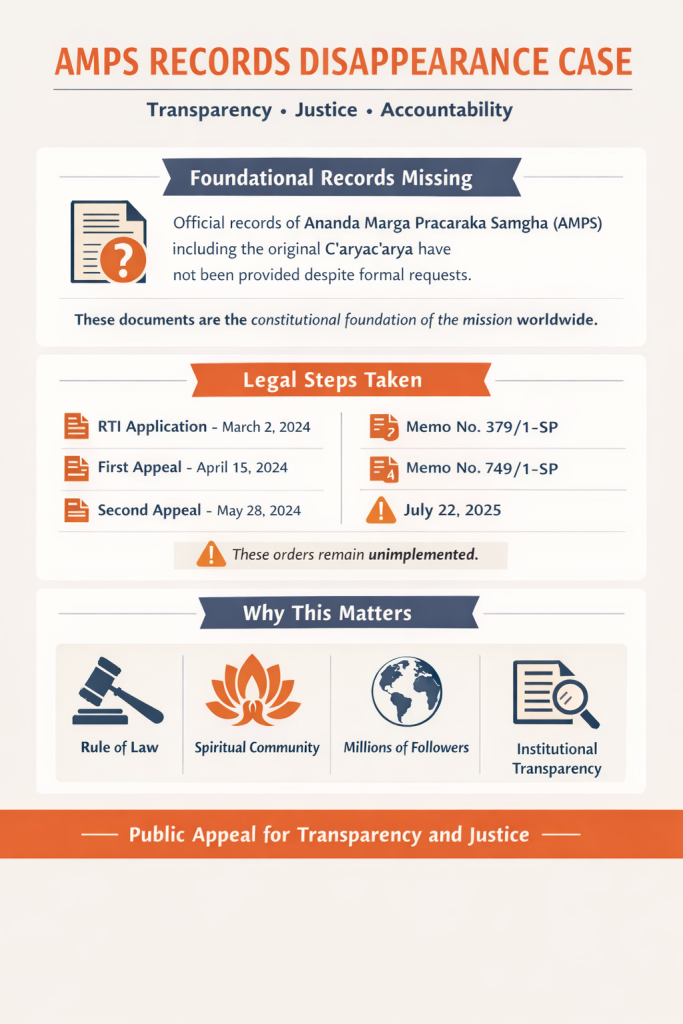
It is with deep concern that many members and observers of the Ananda Marga community have noted a troubling situation regarding the official records of Ananda Marga Pracaraka Samgha (AMPS), which constitute the constitutional and organizational foundation of the Mission.
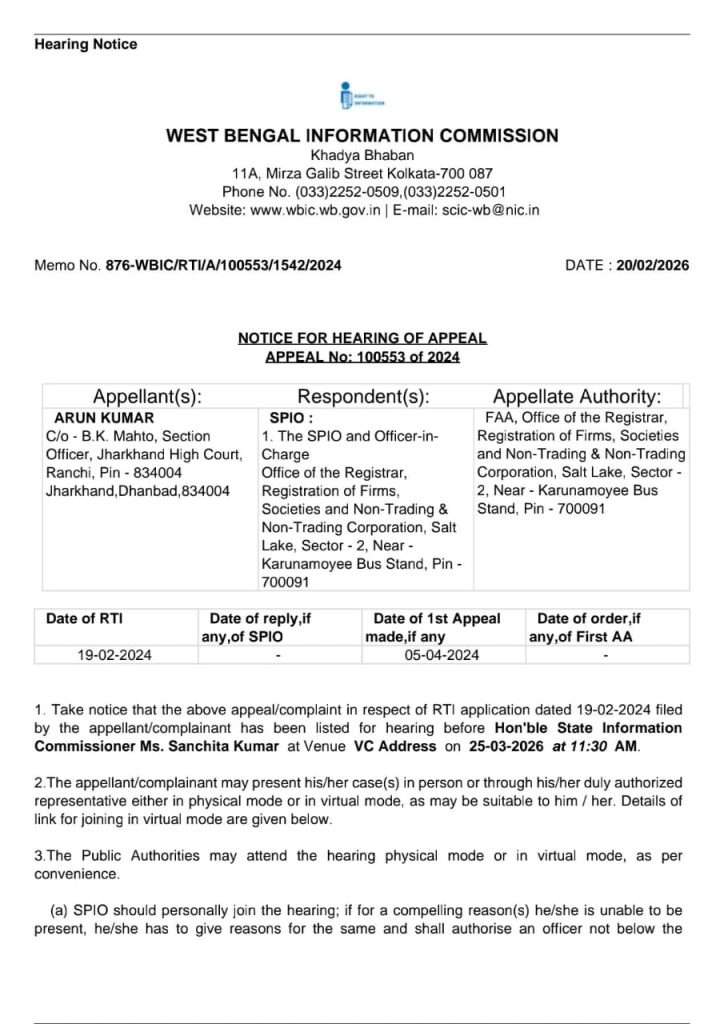
More than two years have passed since a request was formally submitted under the Right to Information (RTI) Act seeking certified copies of these records from the concerned Registrar/Mother Office. Under the RTI Act, public authorities are legally required to provide the requested information within 30 days.
However, despite the passage of significant time and multiple procedural steps, the requested documents have not been supplied.
This situation raises several serious concerns that require clarification and accountability.
- Disappearance of Official Records
The inability of the responsible office to produce certified copies of foundational registration documents suggests the possibility that the official records may have been misplaced, removed, or otherwise disappeared. If true, this represents a serious breach of administrative responsibility because these records define the legal identity and governance structure of AMPS.
- Breach of Public Trust
Public offices entrusted with maintaining official records are obligated to safeguard them with the highest degree of care. The loss or concealment of such records undermines public confidence in institutional integrity and raises questions about administrative accountability.
- Possible Misuse of Authority
Failure to comply with lawful RTI requests may indicate misuse of official position or deliberate obstruction of access to information. Transparency is a cornerstone of democratic governance, and obstruction of information rights contradicts the principles of open administration.
- Impact on Fundamental Rights
Access to information is closely connected to several Fundamental Rights under the Constitution of India, including:
Article 14 – Equality before the law and Equal protection of the Law.
Article 19 – Freedom of association and expression
Article 21 – Protection of life and personal liberty
When information concerning the legal foundation of a global spiritual and social organization is withheld, the rights of members, devotees, and beneficiaries may be affected.
- Legal Consequences under the RTI Act
The RTI Act provides clear mechanisms for accountability. If an authority fails to provide information without reasonable cause, the law allows for penalties under:
Section 20(1) – Monetary penalty for delay or refusal
Section 20(2) – Departmental disciplinary action
Section 19(8)(b) – Compensation for losses suffered due to denial of information
The law allows a penalty of up to ₹25,000 against responsible officials, as well as compensation to affected applicants.
- Delay in Information Commission Proceedings
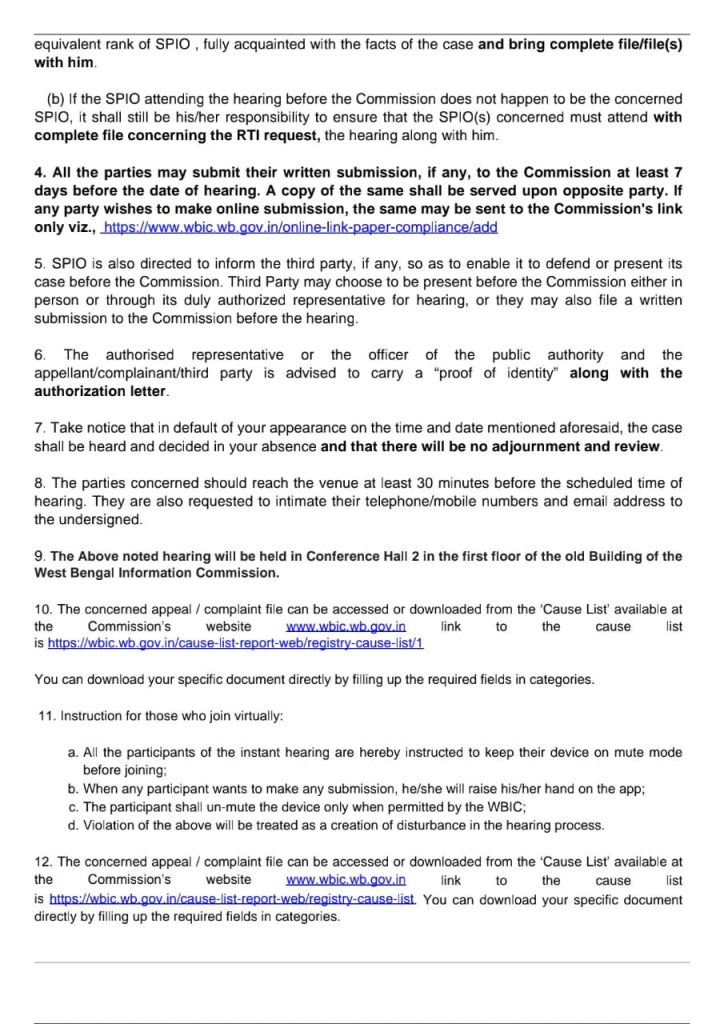
Another concerning aspect is the prolonged delay in the resolution of proceedings before the West Bengal Information Commission. Timely adjudication is essential to uphold the effectiveness of the RTI framework.
Any undue delay in addressing such a matter risks weakening public faith in transparency mechanisms and may require further review by competent judicial authorities.
Why This Matters
The issue is not merely administrative. The records in question relate to the constitutional and organizational structure of a global socio-spiritual mission engaged in education, humanitarian service, and social welfare.
Ensuring transparency, accountability, and recovery of official records is essential not only for the internal governance of the institution but also for the broader principles of rule of law and public trust.
A Call for Transparency and Justice
Members, citizens, and observers respectfully call upon the relevant authorities to:
- Ensure recovery or verification of the original AMPS records
- Enforce compliance with the RTI Act
- Conduct a fair and transparent inquiry
- Uphold the constitutional principles of accountability and justice
Truth and transparency strengthen institutions. Silence and delay weaken them.
For the sake of justice, integrity, and public trust, this matter deserves urgent and impartial attention.